Practical Life
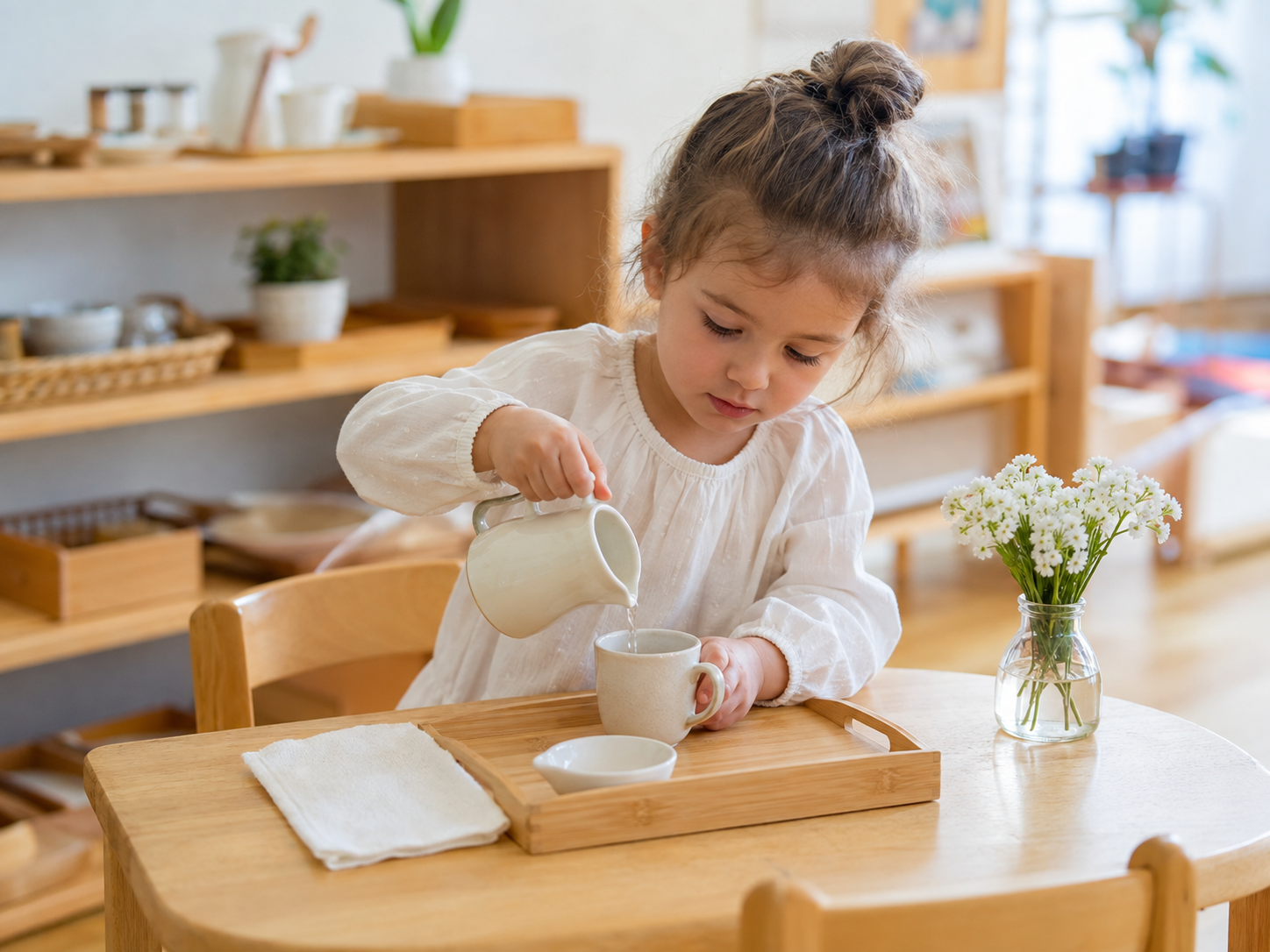
The work of practical life is often the first work of an entering 3-year-old. This work is designed to develop the young child’s hand, transitioning the child from the palmar grasp of toddlerhood to the 3-finger grasp of the more mature hand. Practicing skills such as pouring, spooning, opening containers, folding cloths, cleaning up spills, carrying trays, and buttoning develop the child’s attention span. All of the work of practical life evokes a sense of order, an opportunity to gain independence, and to develop concentration and coordination. Later practical life lessons encourage the child to attend to lengthier and more multi-step tasks such as polishing, cloth washing and food preparation.
Sensorial
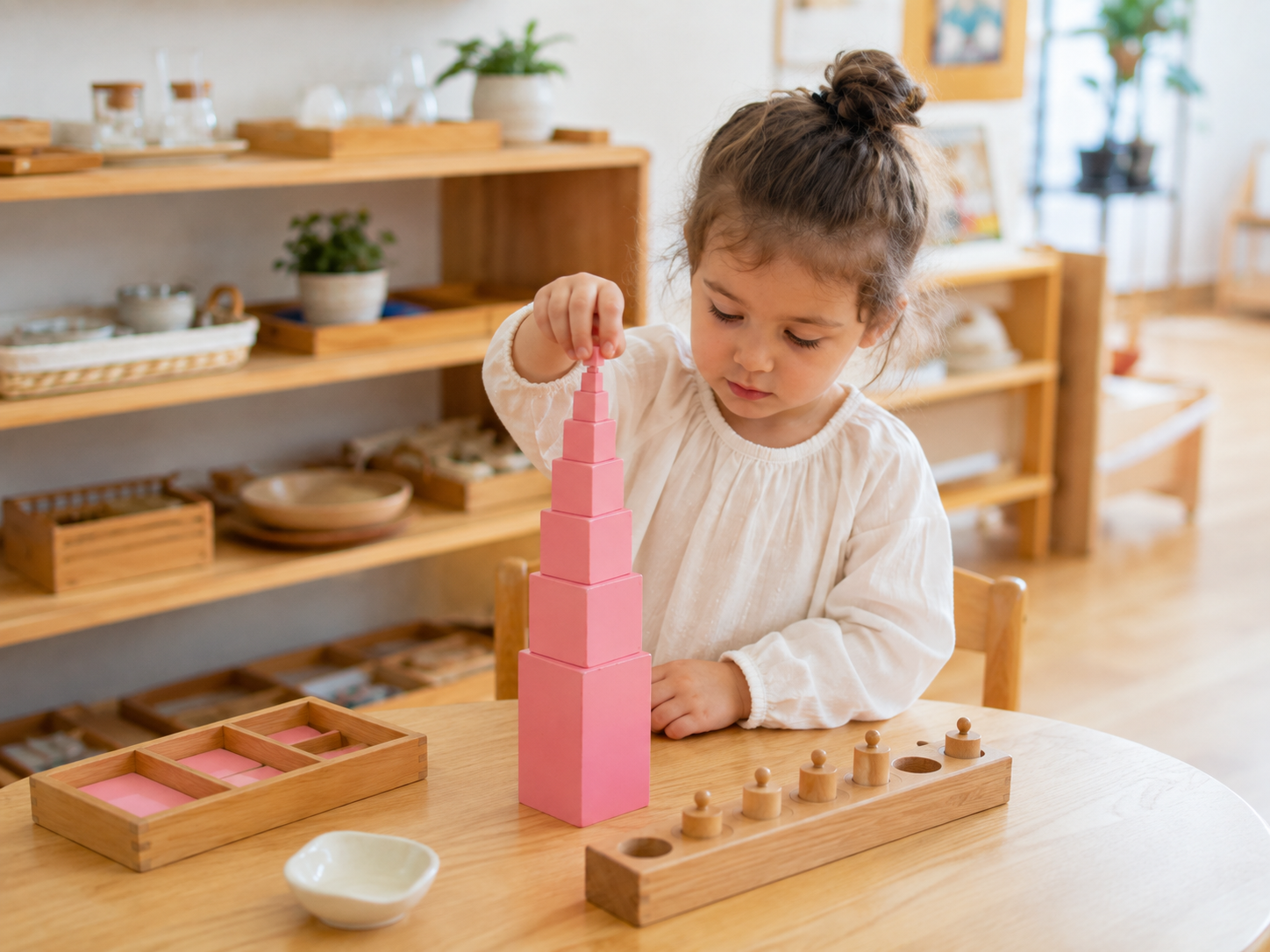
The sensorial materials support the child in organizing sensorial impressions. They give the child the opportunity to practice discriminating between quiet, louder, loudest, or small, larger, largest, or light, darker, darkest. With our senses the experience IS the learning. Because of this, these sensorial materials are considered auto-educative. Once the senses have self-trained through exposure to a wide range of impressions, the guide then offers the language for labeling these impressions. Maria Montessori called the sensorium the “key to the intellect.” The richer the child’s experience of sound, touch, vision, taste, smell, and kinesthesia then the richer the child’s vocabulary and the more discretely the mind is ordered.-
Language
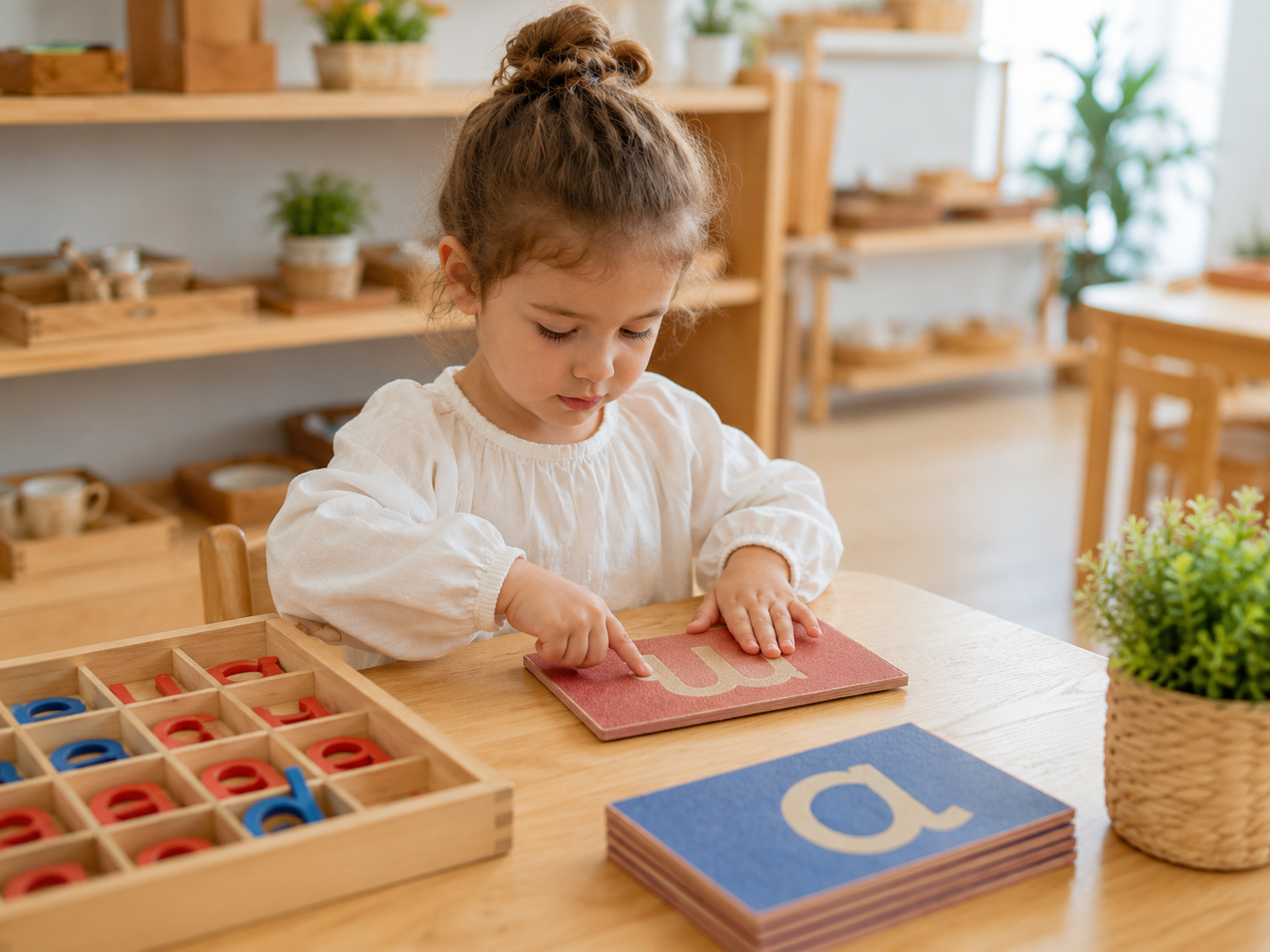
Language development in the Montessori classroom grows naturally from conversation, listening, storytelling, and hands-on activities. Children are introduced to sounds, letters, vocabulary, and early writing through materials that engage both the senses and the hand. As children build confidence with spoken language, they gradually move toward reading and writing in a way that feels purposeful, connected, and appropriate to their stage of development.
Mathematics
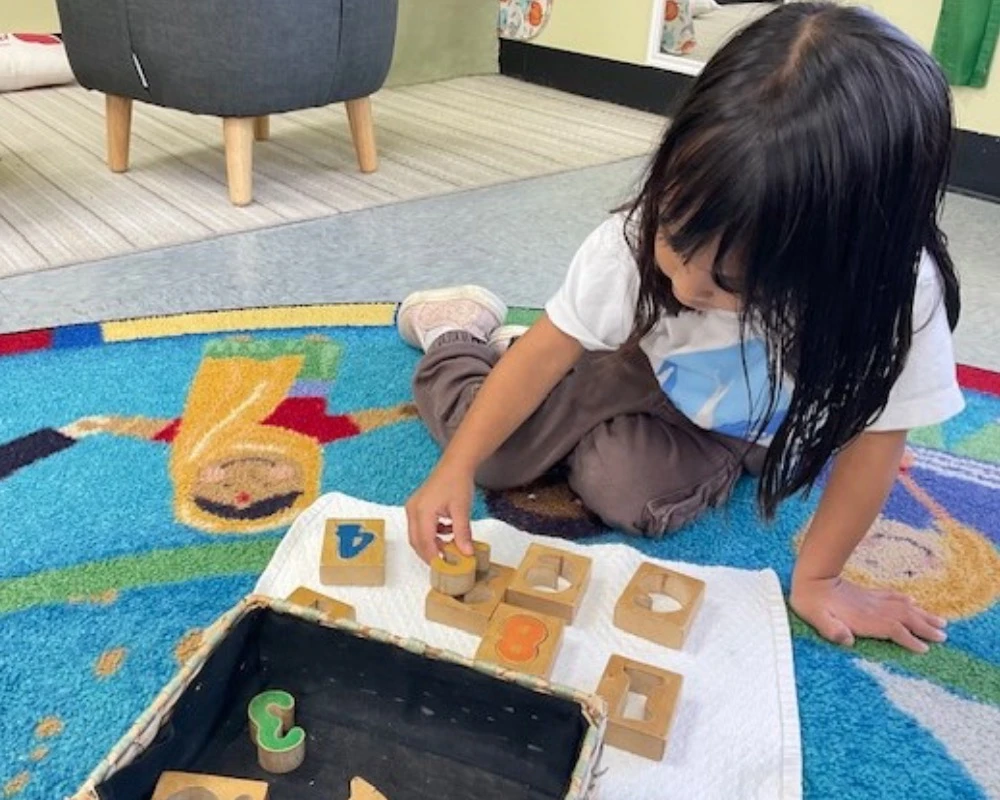
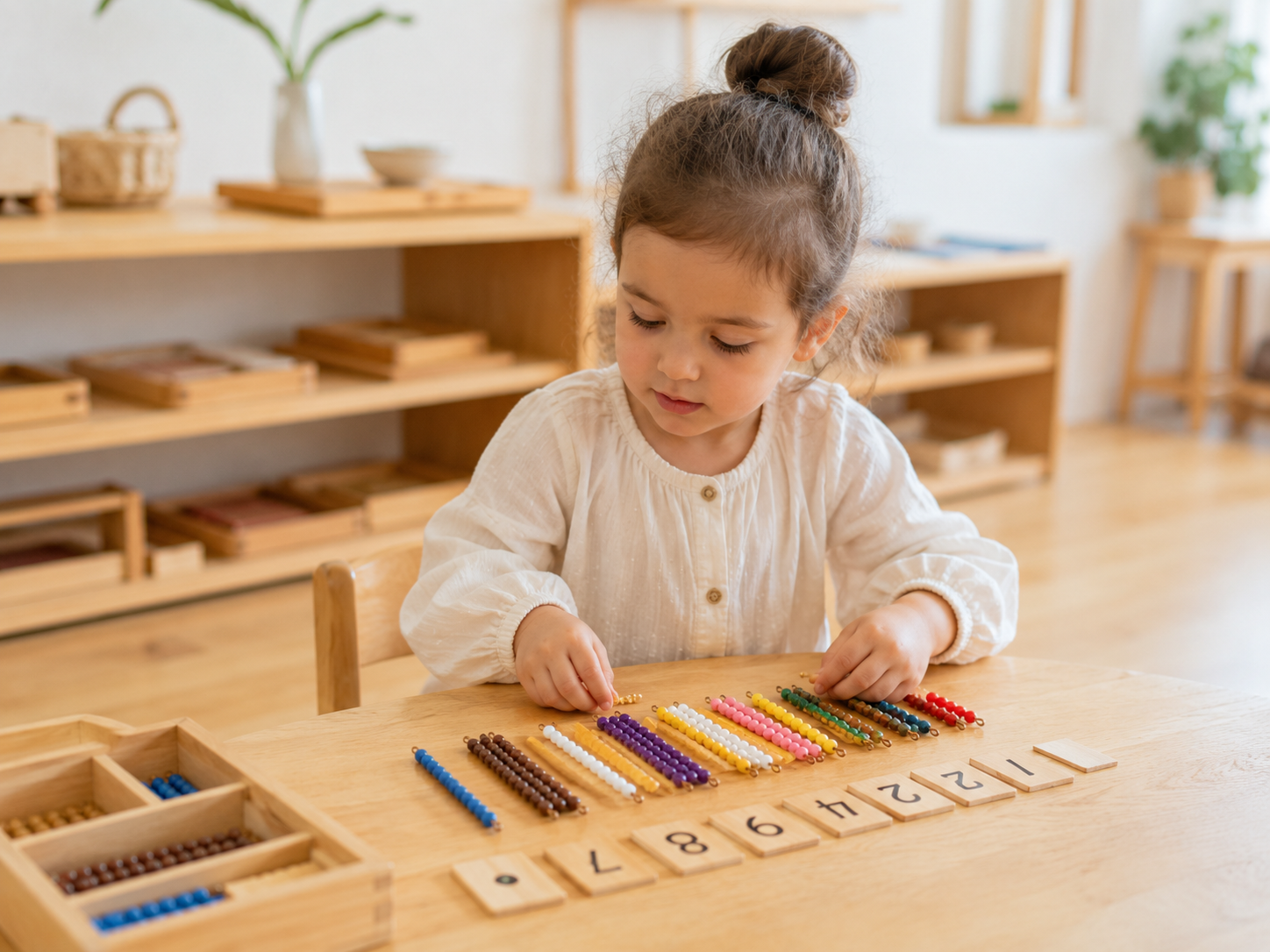
Montessori mathematics begins with concrete materials that allow children to see, touch, and explore quantities before moving into abstract concepts. Children work with counting, number recognition, sequencing, patterns, and early operations using carefully designed materials that make mathematical relationships visible. This hands-on approach helps children develop number sense, logical thinking, concentration, and confidence with math from an early age.
Cultural Studies
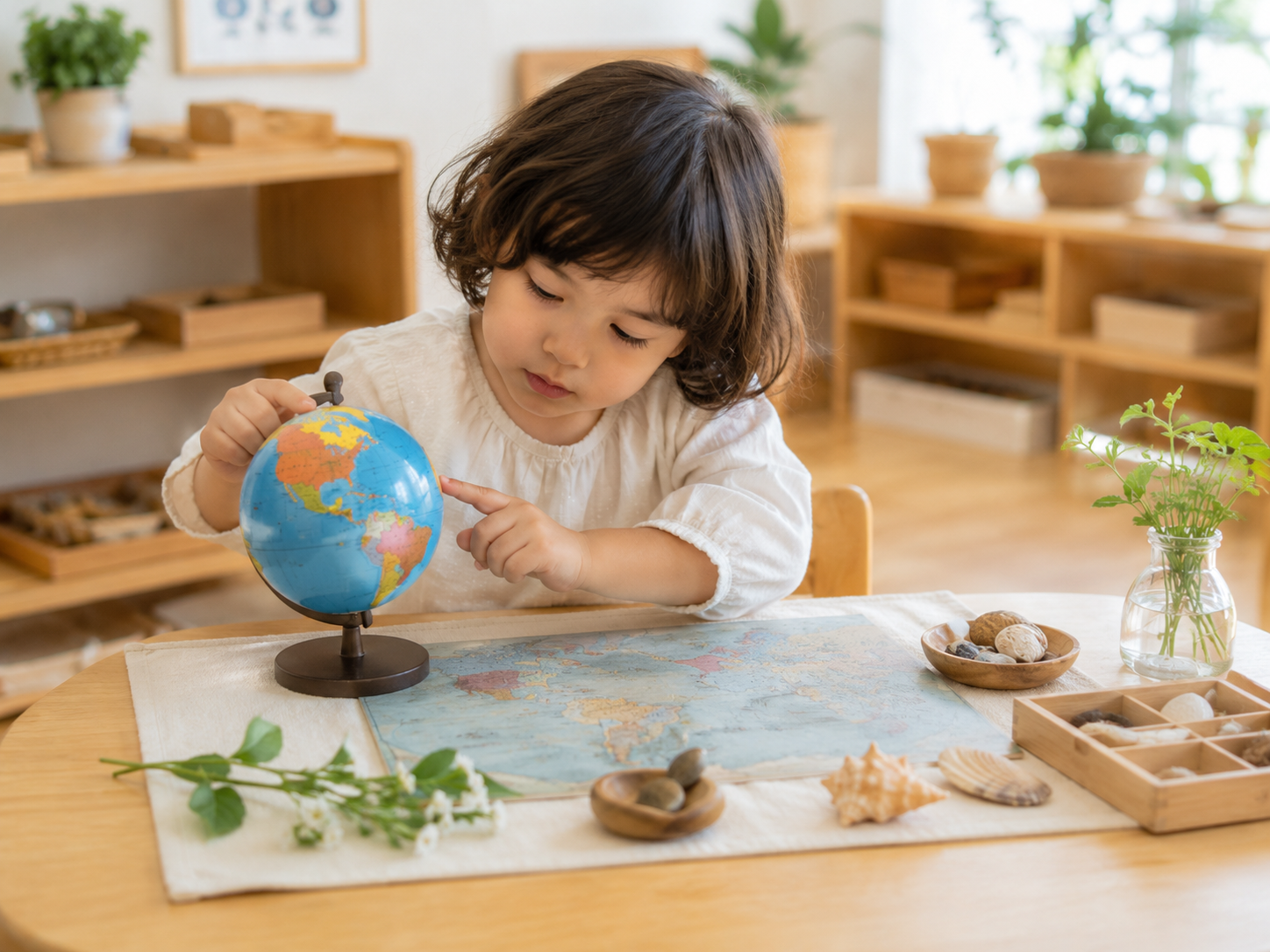
Cultural studies help children begin to understand the world around them through geography, science, nature, history, art, and music. Young children explore topics such as plants, animals, landforms, cultures, seasons, and the natural environment through hands-on materials and real-world experiences. These lessons encourage curiosity, respect for others, observation, and a growing awareness of the larger world beyond the classroom.