As busy parents, the morning rush, meal times, and bedtime can often feel like a race against the clock. When we are in a hurry, it is incredibly tempting to do everything for our children: dress them, brush their teeth, pack their bags, and clean up their crumbs. It just feels faster.
However, Dr. Maria Montessori famously observed: “Never help a child with a task at which he feels he can succeed.”
When we step in too quickly, we inadvertently miss powerful opportunities to build a child’s confidence. Embracing Montessori at home doesn’t mean you have to transform your living room into a replica classroom or buy expensive learning materials. Instead, Montessori parenting is simply a shift in mindset. It’s about looking at your daily schedule and finding slow, intentional moments to let your child practice real-life skills.
By restructuring your family habits around independent routines, you can reduce power struggles and help your child build essential practical life skills. Here is how to seamlessly weave these principles into your day.
1. Slow Down the Morning Routine (Dressing & Grooming)
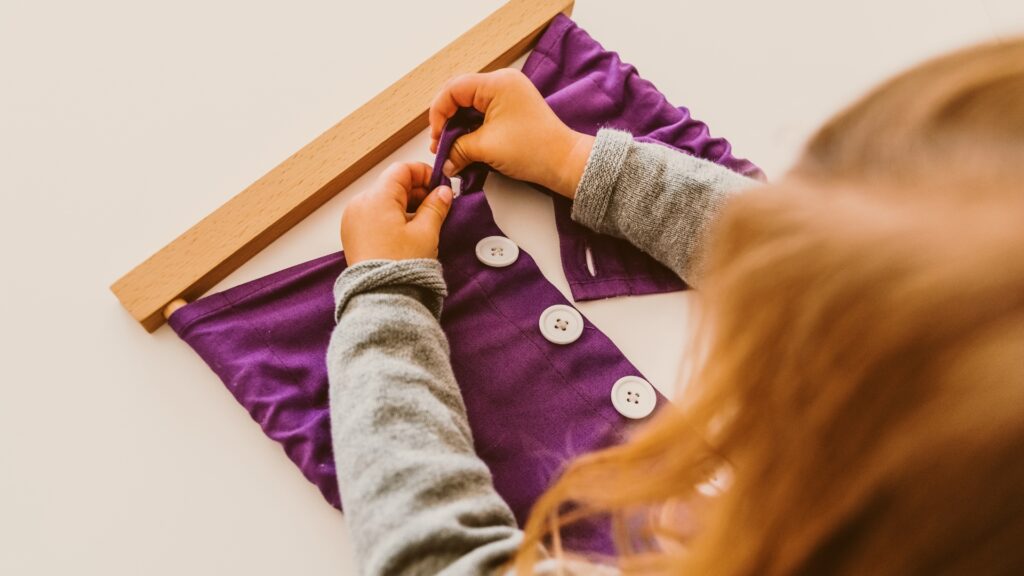
The biggest obstacle to independence at home is time. Young children move at a completely different rhythm than adults. If you leave for work or school at 7:30 AM, trying to let a toddler button their own shirt at 7:25 AM will only result in stress for everyone.
- The Shift: Wake up just 15 to 20 minutes earlier to create a time buffer.
- The Routine: Set up a low basket in their room with two pre-selected outfit choices for the day. Let them choose one and practice putting it on independently. In the bathroom, place a sturdy step stool so they can reach the faucet, alongside a small cup with their toothbrush and toothpaste. When they can physically access their tools, taking ownership of their morning hygiene becomes an exciting milestone rather than a chore.
2. Meal Times: From Passive Eating to Active Contributing
In many homes, children sit at the table and are served their food passively. In a Montessori home, mealtime is a collaborative, community event where even toddlers can play an active role.
- Food Preparation: Children are far more likely to try new foods if they helped make them! Invite your child to rinse vegetables, peel bananas, slice soft strawberries with a dull nylon knife, or spread absolute favorites like butter or jam onto toast.
- Setting and Clearing: Keep a low cabinet in the kitchen stocked with child-safe plates, napkins, and cutlery. Before dinner, ask your child to set the table. When finished, establish a clear routine: they carry their plate to the sink, wipe down their spot with a small damp sponge, and sweep up any stray crumbs with a child-sized hand broom.
3. The Power of “Functional Tidying”
We often treat cleaning up as an annoying task that needs to happen at the very end of the day. In Montessori, tidying up is an equal, joyful partner to playing. It is part of the work cycle.
Instead of waiting until bedtime to clean up a massive mountain of toys yourself, teach the habit of finishing one task before starting another. If your child wants to transition from building blocks to painting, guide them to gently place the blocks back into their designated basket on the shelf first. Make sure everything has a clear, logical home. When cleanup is manageable and structured, children naturally develop a strong internal sense of order.
4. Transitioning to Restful Sleep
A peaceful bedtime routine is all about predictability and independence. When a child knows exactly what to expect, their nervous system relaxes.
Create a visual checklist using simple drawings or photos of your child doing their bedtime steps: Go potty ➔ Brush teeth ➔ Put on pajamas ➔ Choose 2 books ➔ Get into bed. Instead of nagging them about what comes next, you can simply ask, “Let’s check your chart! What is our next step tonight?” This transfers the authority from you to the routine itself, fostering an immense sense of personal capability right before they drift off to sleep.
Progress Over Perfection
When you first start introducing these routines, it will take longer. Eggs will spill, water will splash, and shoes will occasionally be put on the wrong feet. That is completely okay!
The magic of Montessori parenting isn’t about perfection; it’s about honoring the process. Every time your child handles a spill or successfully zips their own coat, they are proving to themselves that they are capable, resilient, and independent.
At Casa Dei Bambini Montessori School, we see the incredible fruit of these independent routines every single day in our Infant, Toddler, Primary, and Elementary programs. If you want to partner with educators who view your child as an active, capable helper, schedule a tour at our Riverstone or Telfair locations today!