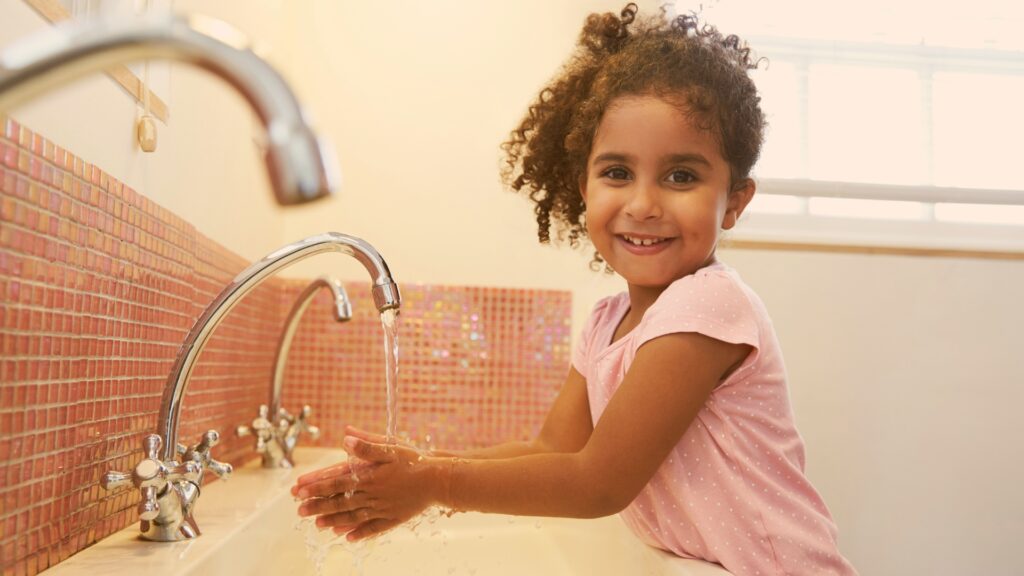
For many families, the mere mention of potty training brings a wave of anxiety. Traditional methods often rely on rigid weekend bootcamps, complicated sticker charts, sticker rewards, or external pressure. It can quickly spiral into a battle of wills between parent and toddler.
In the Montessori philosophy, we look at this milestone entirely differently. We don’t call it “potty training”—we call it Montessori toilet learning.
Training implies something done to a child by an adult. Learning recognizes that control over one’s body is a natural developmental skill that a Montessori toddler can actively master. Our role as adults isn’t to force the process, but to prepare the bathroom environment and offer supportive, neutral guidance that protects a child’s independence.
If you are ready to transition away from diapers, here is how you can implement a respectful, stress-free approach to toilet learning in your home.
1. Shift the Focus to the Bathroom Environment
In an authentic Montessori setting, all bodily care happens in the bathroom, not the living room or a random corner. This establishes a clear mental connection: the bathroom is where we care for our bodies.
To set your child up for success, prepare a bathroom environment they can use completely on their own:
- Accessibility: Use a low, sturdy floor potty or provide a secure step stool paired with a child-sized reducer seat on the adult toilet so their feet are firmly planted.
- The Dressing Station: Place a small basket nearby filled with several pairs of loose, easily pull-up cotton training underwear and pants (avoid complicated buttons, belts, or onesies).
- The Cleanup Zone: Keep a low basket with clean wipes, a small wet-bag or bucket for soiled clothing, and a stack of small rags so they can help wipe up any spills on the floor.
2. Ditch Rewards for Natural Internal Motivation
It is highly tempting to use gold stars, candy, or excessive praise (“You’re a big boy now!”) to get a child to use the toilet. However, Montessori principles teach us that external rewards actually weaken a child’s internal motivation.
When a child gets a reward, they stop listening to their physical bodily cues and start focusing on pleasing the adult. Instead, use calm, matter-of-fact language. If they use the toilet successfully, state what you see neutrally: “You listened to your body and the urine went into the potty.” This lets the child feel a genuine sense of personal pride and internal accomplishment.
3. Move from Diapers to Cotton Training Underwear Early
Disposable diapers are engineered to pull moisture away instantly, meaning toddlers often have no idea they have even urinated.
By transitioning to cotton training underwear or thick cloth training pants while at home, the child immediately feels the warm, wet sensation when they have an accident. This sensory feedback is vital—it is the exact brain-to-body link that helps a toddler realize, “Oh, my bladder is releasing, I need to walk to the bathroom.”
4. Treat “Accidents” as Neutral Learning Opportunities
Puddles on the floor are an inevitable, completely normal part of the learning curve. How we react to them dictates how comfortable a child will feel moving forward.
If an accident happens, avoid showing frustration, sighing, or shaming. Instead, treat it as a neutral fact: “I see your pants are wet. Let’s go to the bathroom to change into dry clothes.”
Involve your child in the cleanup process entirely without punishment. Guide them to take off their wet clothes, place them in the laundry basket, get a clean pair of pants, and wipe up the floor with a rag. This isn’t a consequence, it is simply the logical, practical sequence of caring for ourselves and our home.
Signs of Readiness
Instead of looking at the calendar or age charts, look closely at your child’s behavior. A toddler may be entering a sensitive period for toilet learning if they:
- Can walk steadily and pull their own pants up and down.
- Express a strong interest in watching family members use the restroom.
- Can stay dry for a couple of hours at a time or wake up dry from a nap.
- Explicitly tell you or show you through gestures that they are currently using their diaper.
A Shared Journey
When we slow down and treat toileting as an empowering skill to be learned rather than a chore to be checked off, it becomes a beautiful opportunity for your child to step confidently into their own independence.
At Casa Dei Bambini Montessori School, our dedicated Toddler teachers work hand-in-hand with parents to maintain complete consistency between the classroom and home during this important milestone. Want to join a community that celebrates your child’s natural developmental milestones? Schedule a private tour at our Riverstone or Telfair campus today!